


A filling repairs a hole or damaged part of a tooth. If your child needs one for decay, the dentist removes the decayed area, cleans and dries the tooth, then places the filling material. Local anaesthetic may be used if needed. The plan depends on the tooth, so ask the dentist to explain your child's treatment before it starts.
Hearing that your child needs a first filling can leave you with a lot of questions. Will they need an injection? What can they eat afterwards? You can bring those questions to the appointment, including anything your child is worried about.
At Austral Smiles, our children’s dentistry team explains care in simple terms. This guide focuses on a first filling rather than a routine first check-up.
Why does a baby tooth need treatment?
Decay can affect baby teeth as well as adult teeth. Untreated decay can cause pain, an abscess and problems with chewing. Healthdirect explains how decay develops and why it needs assessment.
A filling is one possible treatment, not the answer for every tooth. The Royal Children’s Hospital explains that treatment for childhood decay may involve fillings or crowns; more severe cases may need a tooth removed. Ask which option is being recommended for your child and why.
If the tooth doesn't hurt, that doesn't rule out decay. Early decay may have no symptoms, and a dentist may use an examination and X-rays to diagnose it.
What happens before the filling starts?
The dentist examines the tooth and asks about symptoms; an X-ray may also be needed. Ask to see which tooth needs attention and what the examination has shown.
Tell us if your child is nervous, has had a difficult dental visit before, or needs explanations in a particular way. You can ask what words to use at home, whether you can stay nearby, and how your child can let the dentist know they need a pause.
Before treatment, ask what the proposed filling involves, what alternatives apply, and what it will cost. For the clinic's general information about materials, see our dental fillings page.
Will my child need a local anaesthetic?
Local anaesthetic may be used to numb the tooth if needed. Better Health Channel describes this step as part of preparing a tooth for a filling. Ask whether it is planned for your child and what they may feel; don't promise them that they won't feel anything.
You can ask the dentist to explain each step to your child before proceeding. Austral Smiles' children's dentistry service uses clear explanations and a supportive approach to visits.
How is the filling put in?
For a cavity caused by decay, the dentist uses a drill and other tools to remove the decayed part. The hole is then cleaned and dried before filling material is placed. Materials have different benefits and limitations, which the dentist can discuss with you.
Tooth-coloured options include composite resin and glass-ionomer cement. Healthdirect’s fillings guide explains these materials; the dental professional advises which is suitable. You don't need to choose a material from its name or colour alone.
A temporary filling may be used when treatment needs more than one session. It is later replaced to complete treatment. If your child receives a temporary filling, ask when the next appointment is needed.
What should we do after the appointment?
If local anaesthetic has been used, wait until feeling has returned to the lips and tongue before eating, to avoid biting the soft tissues. Ask for instructions for your child's filling material and when they can eat. Our fillings aftercare information explains why this timing matters.
A filled tooth may be sensitive to hot, cold or sweet foods, or when biting. If sensitivity is still present after a few days, see the dental professional again. Fillings can also chip or crack over time and need checking.
If a filling or part of it falls out, see your dental professional as soon as possible. Better Health Channel advises having lost or broken fillings assessed.
For a separate problem such as a broken tooth or a lost filling, our guide to preparing for an emergency appointment explains what information to have ready.
Can we use CDBS for the filling?
Fillings are among the basic services that the Child Dental Benefits Schedule (CDBS) can cover for eligible children. Benefit limits and item or time restrictions apply, so coverage needs checking before treatment.
When booking, say you'd like to use CDBS. Check the remaining balance through your Medicare online account linked to myGov or by calling Medicare. At the appointment, ask what each service costs and whether CDBS covers it before signing the consent form. These steps come from Services Australia’s guide to using CDBS.
You can also read our guide to Medicare and dental-clean cover if you're comparing the funding arrangements for different family members.
What should we ask before leaving?
- Which tooth was treated, and which material was used?
- Is the filling temporary, and is another appointment needed?
- When can my child eat, and what aftercare should we follow?
- What changes should prompt a call, and when is the next check?
If you'd like to discuss your child's treatment, book an appointment at Austral Smiles or call (02) 9053 1997. Tell us it's their first filling and share your questions when you book.
Sources
Sources checked 8 November 2026. This is general information for parents and carers, not an individual treatment plan. Follow the instructions given for your child's tooth.
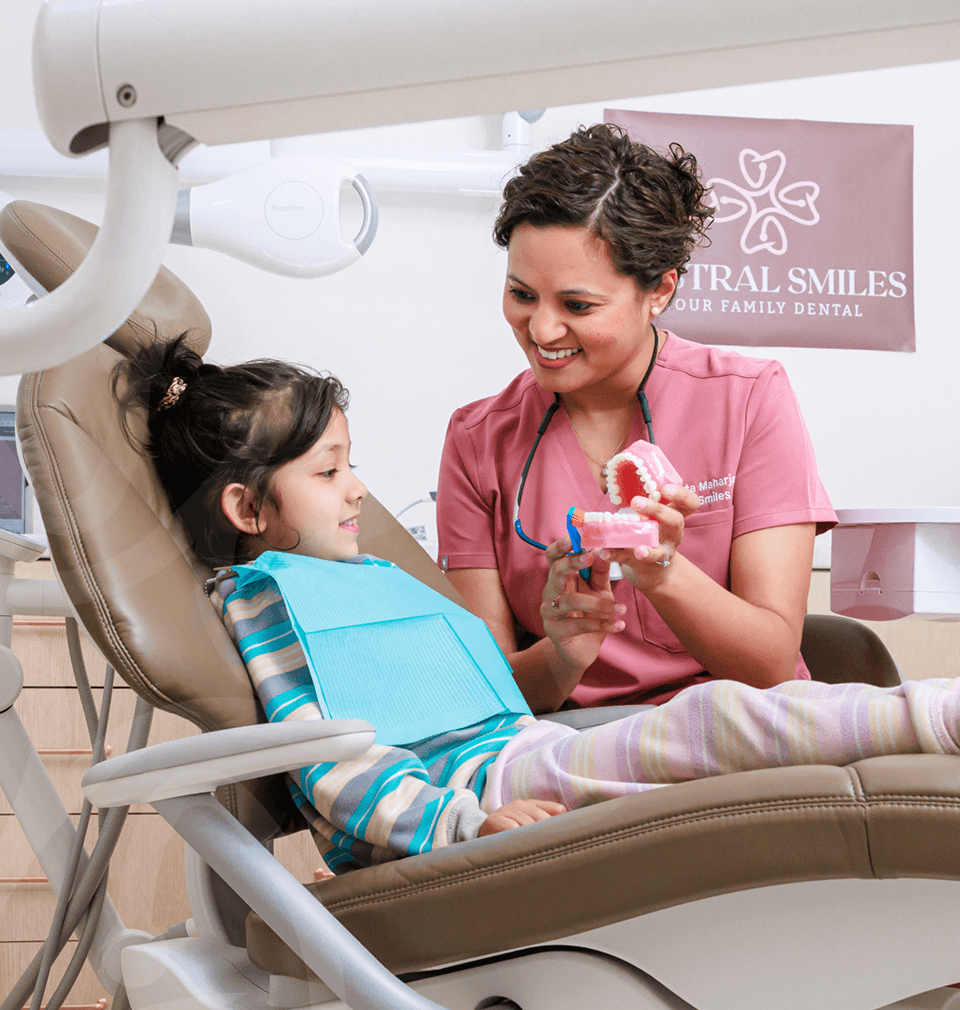
Images: existing Austral Smiles website photography showing oral-health education with a tooth model. They do not show a filling procedure or a treatment result.