


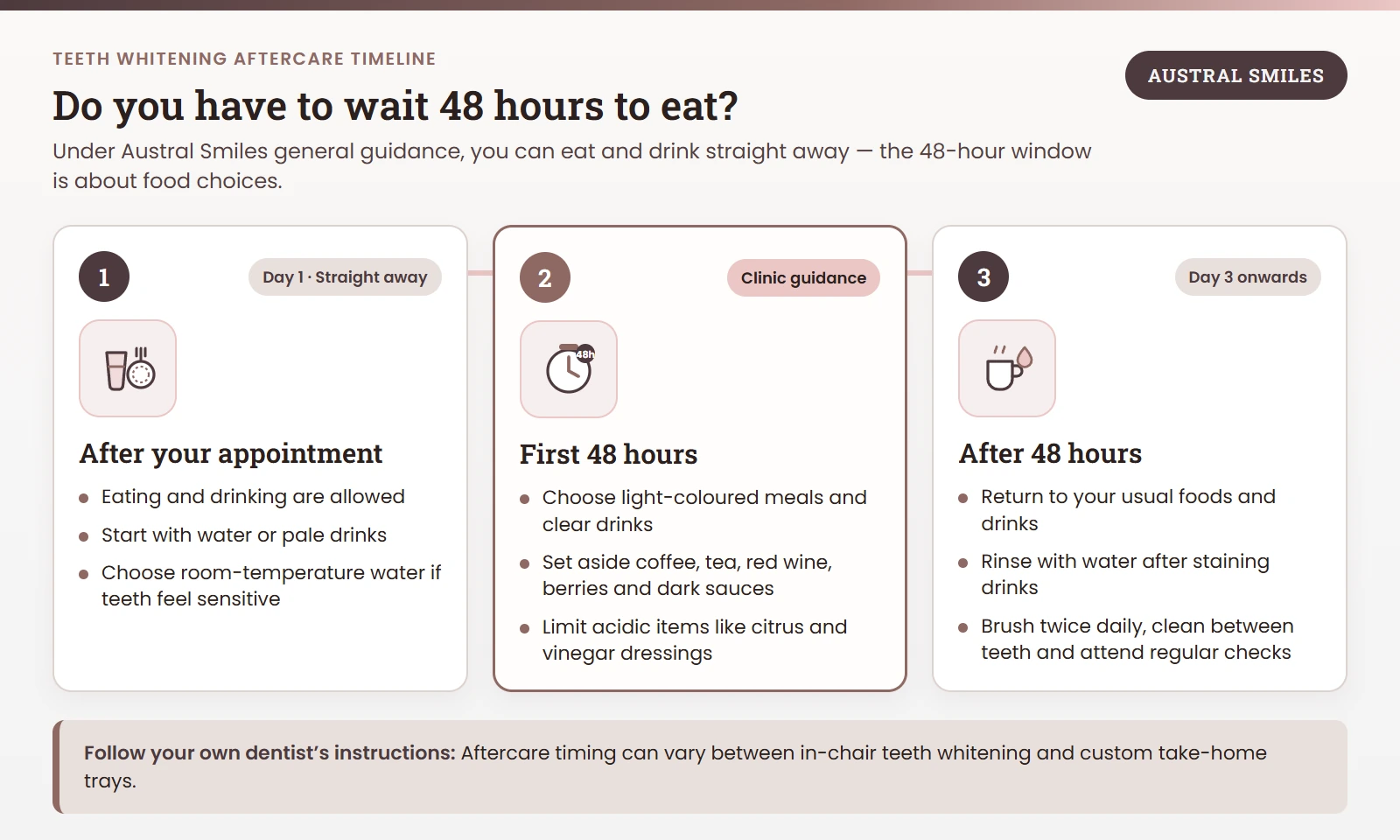
You do not have to fast for 48 hours after professional teeth whitening. Under Austral Smiles’ general aftercare guidance, you can eat and drink straight after your appointment — the 48-hour window is about choosing lighter-coloured foods and drinks while limiting dark or acidic items. Always follow the personal instructions your dentist gave you for your specific treatment.
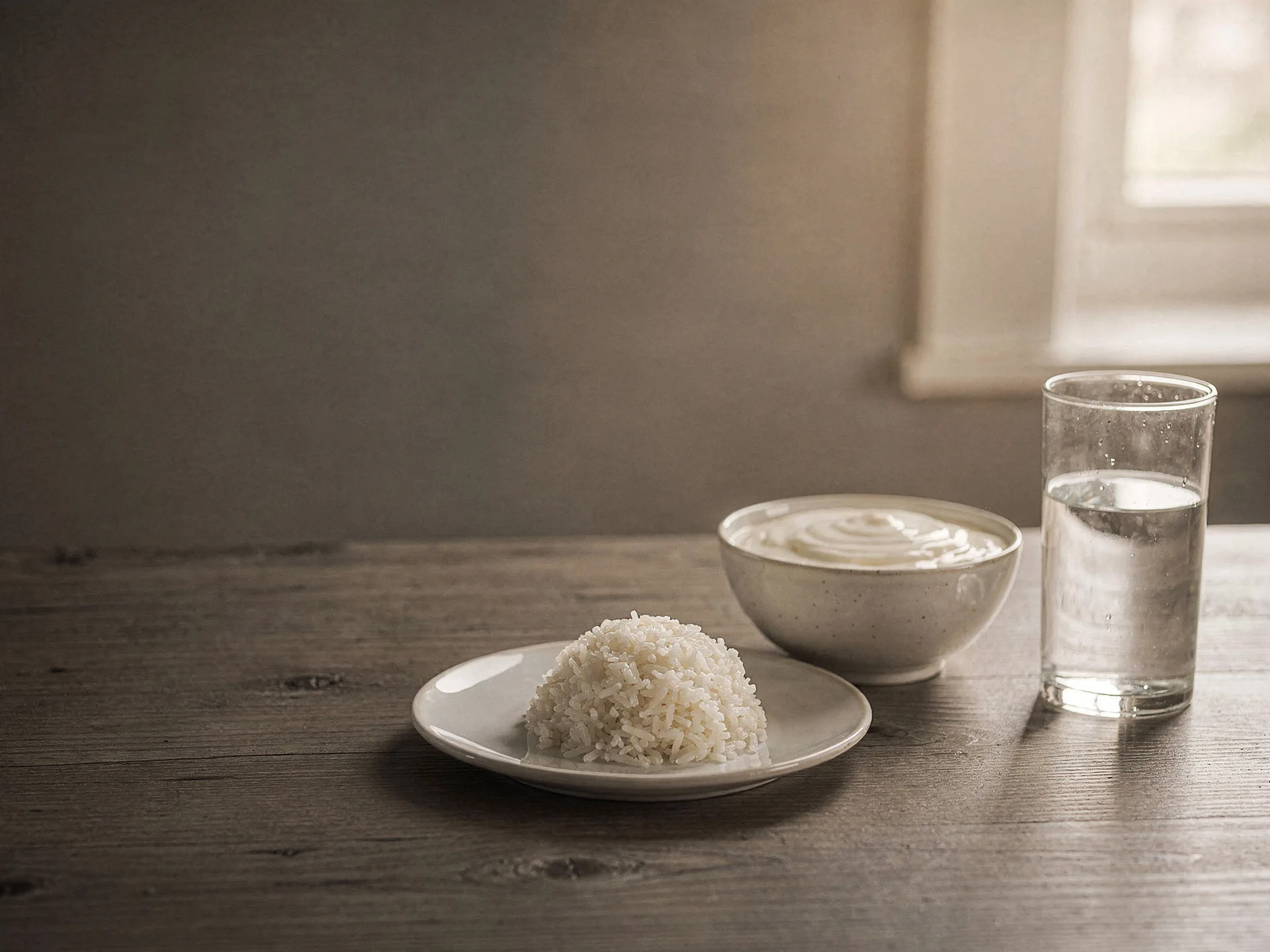
Do you have to fast, or just adjust food choices for 48 hours?
Patients often confuse a brief post-visit fasting rule with a two-day food-choice window. Some clinics set a short water-only pause right after gel application, while others allow a light meal straight away. On our professional teeth whitening page, Austral Smiles confirms you can eat and drink after an in-chair session and recommends lighter food and drink choices for the first 48 hours.
During those two days, enamel can pick up surface stains more readily and teeth may feel temporarily sensitive to cold or acidic foods. Choosing pale, low-acid meals lets you eat normally without skipping meals.
What the clinical evidence says about a strict “white diet”
It helps to separate our clinic’s 48-hour precaution from claims that a universal white-only diet is essential for everyone. A systematic review and meta-analysis of randomised clinical trials on PubMed (PMID 39557282) pooled trials comparing pigment-free diets with unrestricted diets during bleaching and found similar whitening outcomes overall.
However, an in-office randomised clinical trial on PubMed (PMID 32169479) found a smaller whitening response on some colour measures when participants repeatedly rinsed with coffee after bleaching. Do not assume every post-treatment exposure has zero effect — moderating coffee, tea, red wine and dark sauces for 48 hours while following your dentist’s treatment-specific advice is a practical middle ground.
What to eat and drink in the first 48 hours
Plan plain, light-coloured meals and clear drinks for the first two days. If you have a food or drink that can stain teeth, Healthdirect Australia suggests rinsing your mouth with water afterwards.
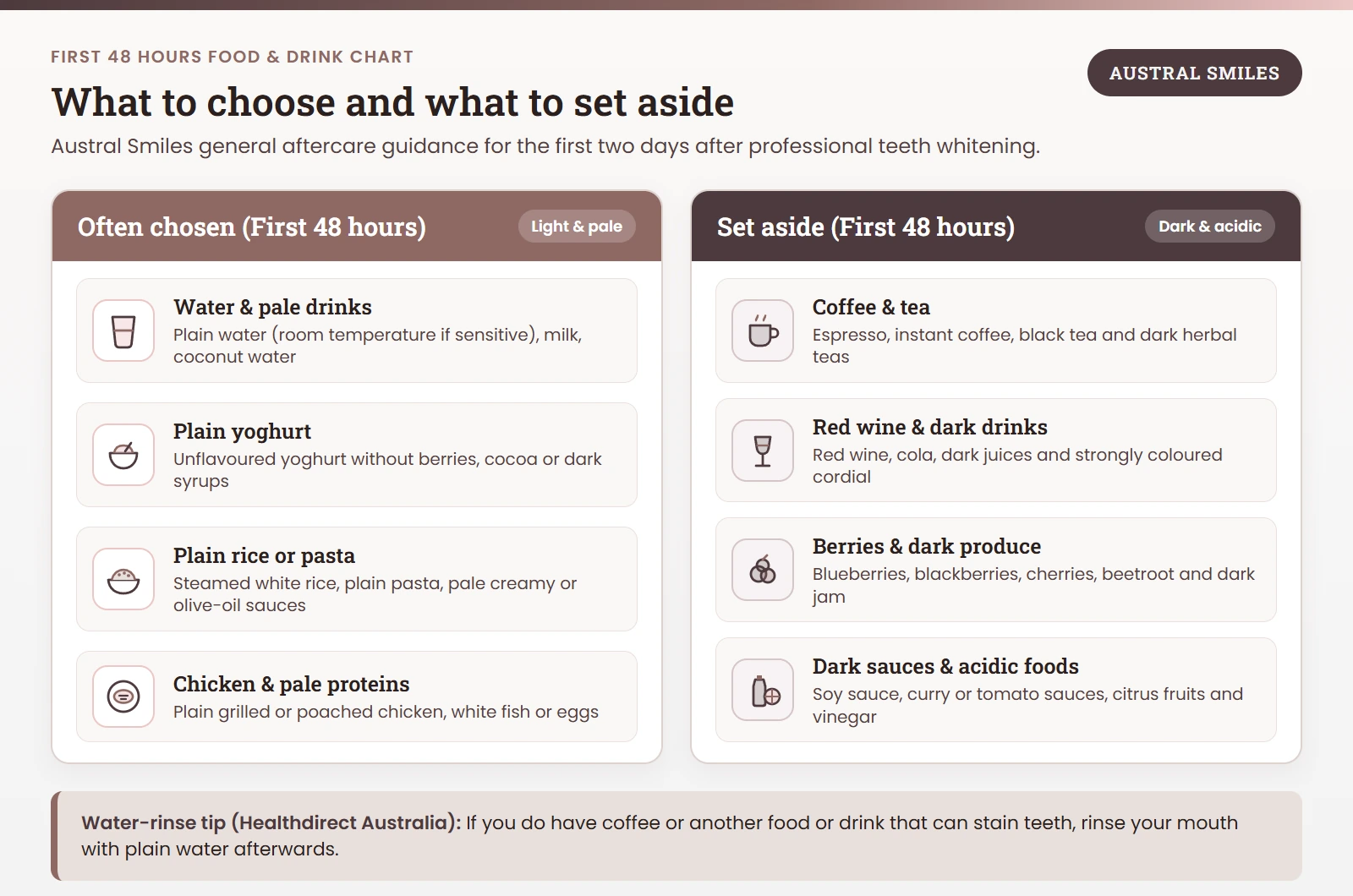
| Category | Often chosen | Set aside for 48 hours | Practical tip |
|---|---|---|---|
| Drinks | Plain water, milk, coconut water | Coffee, tea, red wine, cola, dark juices | Pick room-temperature water if teeth feel sensitive; rinse with water after dark drinks. |
| Breakfast & snacks | Plain yoghurt, porridge, bananas, pale bread | Berries, dark jams, cocoa, berry smoothies | Keep spreads and yoghurt toppings light-coloured for two days. |
| Mains | Plain chicken, white fish, eggs, tofu | Tomato sauces, dark curries, dark marinades | Season simply with salt, pepper or pale herbs. |
| Sides & sauces | Plain rice, plain pasta, potatoes, pale sauces | Soy sauce, balsamic vinegar, citrus, vinegar dressings | Limiting acidic dressings and citrus helps reduce enamel sensitivity. |
Before and during your whitening appointment
Preparation starts with checking suitability before gel is placed. Both Healthdirect and the Australian Dental Association advise against teeth whitening during pregnancy or breastfeeding, and Healthdirect notes whitening is not recommended if you have untreated gum disease, cracks, decay or unexplained tooth sensitivity.
At Austral Smiles, a supervised whitening pathway follows four steps:
- Suitability review: Your dentist checks for decay, gum inflammation, sensitivity and front-tooth restorations before proceeding.
- Treatment selection: You discuss in-chair LED-assisted whitening versus dentist-supervised take-home trays so aftercare matches your method.
- Gum protection and gel (in-chair): A protective barrier shields your gums and lips before hydrogen peroxide gel is placed on natural tooth surfaces and paired with LED light.
- Monitoring and aftercare: Your dentist monitors comfort throughout and confirms your personal food, drink and sensitivity instructions before you leave.
What if my teeth feel sensitive or my gums feel irritated?
Temporary cold sensitivity and mild gum or soft-tissue irritation are recognised side effects of peroxide whitening gel (Australian Dental Association). Sipping room-temperature water, avoiding very cold or acidic drinks and asking your dentist whether a sensitive-teeth toothpaste suits you can help. If sensitivity or irritation lasts longer than a day or two, Healthdirect recommends a dental check.
How whitening affects crowns, veneers and fillings
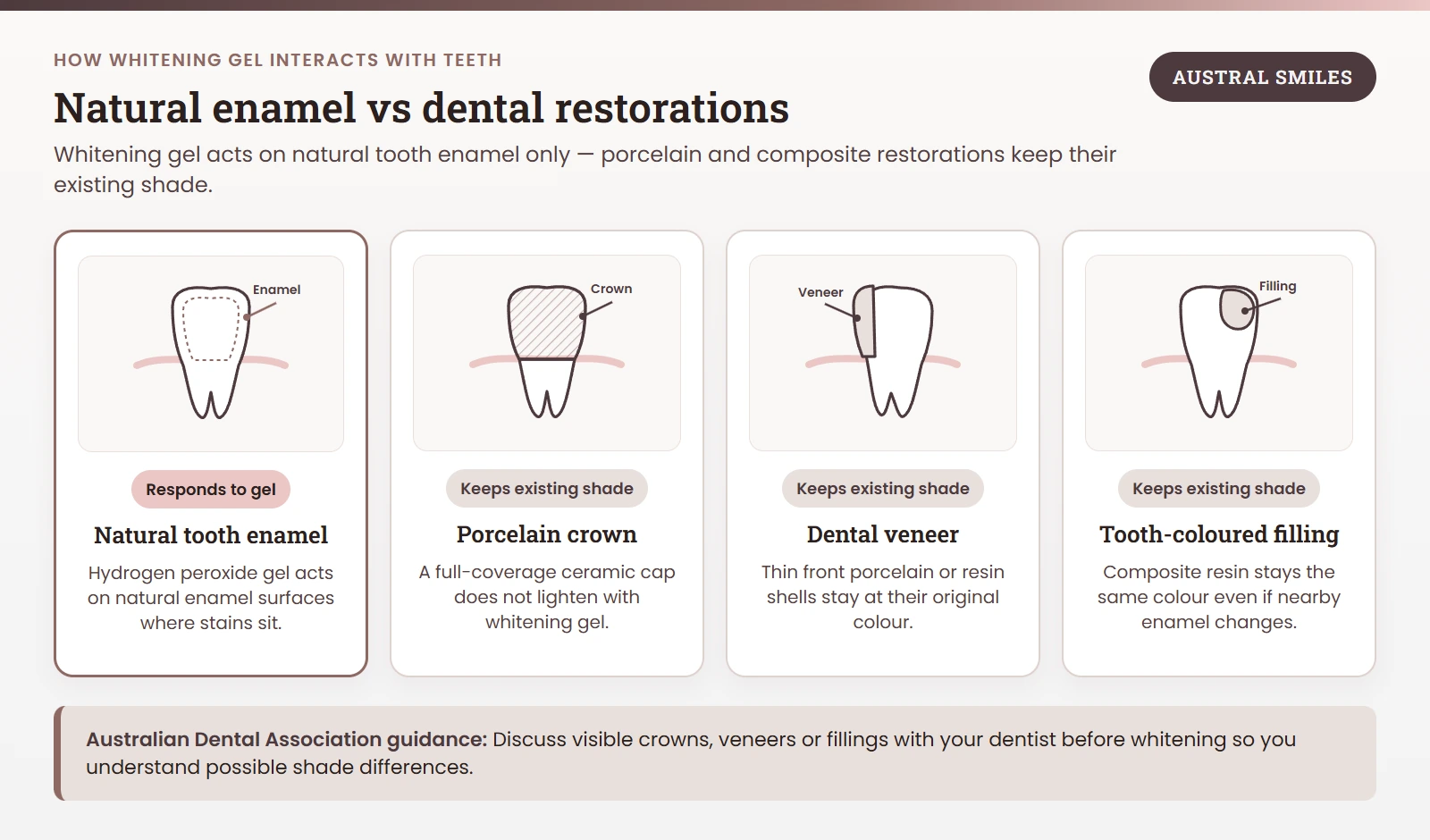
Whitening gel acts on natural tooth enamel only. Porcelain crowns, veneers and tooth-coloured fillings keep their existing shade, which can leave a visible difference next to lightened teeth. The Australian Dental Association recommends discussing any restorations with your dentist before whitening.
Looking after your teeth after day two
After 48 hours, everyday care shapes how quickly new surface stains appear. Healthdirect recommends brushing twice a day, cleaning between teeth daily, avoiding cigarettes and rinsing with water after staining foods or drinks. Routine check-ups and professional cleans also help manage surface staining, and Healthdirect notes professional cleaning as an alternative to whitening for some stains.
If you use custom-fitted take-home trays rather than an in-chair session, follow your dentist’s wear schedule and ask before arranging a dentist-supervised touch-up. Austral Smiles is at Level 1, Suite 2, 101 Browns Rd, Austral NSW 2179 — open Monday and Wednesday to Friday 9 am–5 pm, Tuesday 11 am–7 pm and Saturday 8 am–4 pm (closed Sunday). You can book online or call (02) 9053 1997.
Frequently asked questions
Do I have to wait 48 hours before eating after teeth whitening?
No. Under Austral Smiles general aftercare guidance, you can eat and drink straight after professional teeth whitening. The 48-hour period is a food-and-drink choice window where lighter-coloured options are recommended, not a 48-hour fast. Always follow the specific timing your own dentist gives you.
Can you drink coffee 48 hours after teeth whitening?
Yes. Once the first 48 hours have passed, Austral Smiles general guidance allows you to return to your usual foods and drinks, including coffee and tea. Rinsing your mouth with plain water afterwards helps limit everyday surface staining, as recommended by Healthdirect Australia.
What if I drank coffee or ate something dark in the first 48 hours?
If you have coffee, tea, red wine or a dark sauce during the first two days, Healthdirect Australia recommends rinsing your mouth with plain water afterwards. There is no need to panic or brush aggressively right away — just return to lighter-coloured choices for the rest of the 48-hour window and keep up your normal gentle brushing routine.
What can I eat and drink on the first day after whitening?
On day one, Austral Smiles recommends clear or pale drinks such as plain water, milk or coconut water, paired with light-coloured foods like plain yoghurt, steamed rice, plain pasta, chicken, white fish or eggs. If cold drinks make your teeth sting, choose water at room temperature.
How long does sensitivity last after whitening, and when should I call my dentist?
Temporary sensitivity to cold drinks or mild gum irritation is a known side effect of peroxide whitening gel and usually eases within a day or two. Ask your dentist whether a toothpaste for sensitive teeth suits you. If sensitivity or soft-tissue irritation lasts longer than a day or two, Healthdirect Australia advises booking a dental check.
Can whitening change the colour of veneers, crowns or tooth-coloured fillings?
No. Whitening gel acts on natural tooth enamel and does not change the shade of porcelain crowns, dental veneers or tooth-coloured composite fillings. The Australian Dental Association recommends discussing any visible restorations with your dentist before whitening so you understand possible shade differences.
Do the same food and drink instructions apply to take-home trays and in-chair whitening?
Not always. An in-chair LED-assisted appointment at Austral Smiles is usually followed by a single 48-hour dietary precaution window, whereas dentist-supervised take-home kits use custom-fitted trays over multiple days. Your dentist will give you treatment-specific instructions on spacing food and drinks around each tray session.
General information only, not personal dental advice; see your dentist for an assessment tailored to your teeth.
Sources
Accessed 24 November 2026.
- Healthdirect Australia — Teeth whitening
- Australian Dental Association — Teeth whitening
- Austral Smiles — Professional teeth whitening and aftercare
- PubMed (PMID 39557282) — Systematic review and meta-analysis of dietary pigment restrictions during dental bleaching
- PubMed (PMID 32169479) — Randomised clinical trial on post-bleaching coffee exposure after in-office whitening